
DuraFlex Chimney Sweep in Mission Valley: A Homeowner’s Guide
A DuraFlex chimney liner is not a generic flex hose, and sweeping one properly depends on knowing which alloy grade you actually have. Most Mission Valley homeowners we speak with know they have “a liner” but not whether it’s 304 stainless, 316Ti, or an aluminum hybrid, and that distinction changes what the sweep involves and what we’re checking for on camera. Here’s what you need to know before anyone pulls brushes up your flue. If you’d rather not deal with it yourself, call (877) 752-2758. We answer 24/7. Fast dispatch from 7am to 7pm, Sunday through Friday.
What Is DuraFlex and Why Does the Alloy Grade Matter?
DuraFlex is a professional-grade flexible chimney liner system used by certified sweep and repair companies, not a product you’ll typically find sitting on a shelf at a big-box hardware store. The brand matters less than the specific alloy spec, because DuraFlex liners come in different stainless grades for different fuels and appliance types. A 304 stainless liner is the standard for wood-burning fireplaces and stoves. A 316Ti liner contains titanium-stabilized stainless that resists the acidic condensate produced by gas appliances. Aluminum liners exist for certain low-temperature gas applications, but they are never appropriate for solid fuel. When a homeowner in Mission Valley has a gas insert, a wood stove, or a factory-built fireplace, the liner we document during a chimney sweep has to match what’s actually burning in the firebox. Ordering “flex liner” without specifying the grade is where code-compliance problems start, and we see that mismatch more often than most people would expect.
How a DuraFlex Liner Sweep Differs from a Clay Tile Sweep
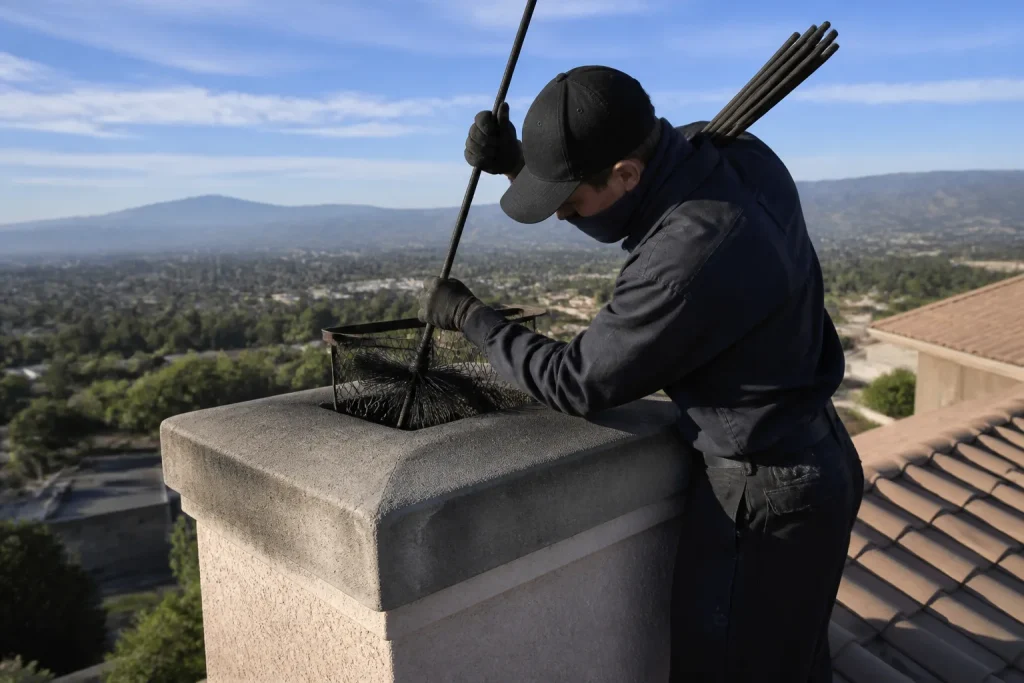
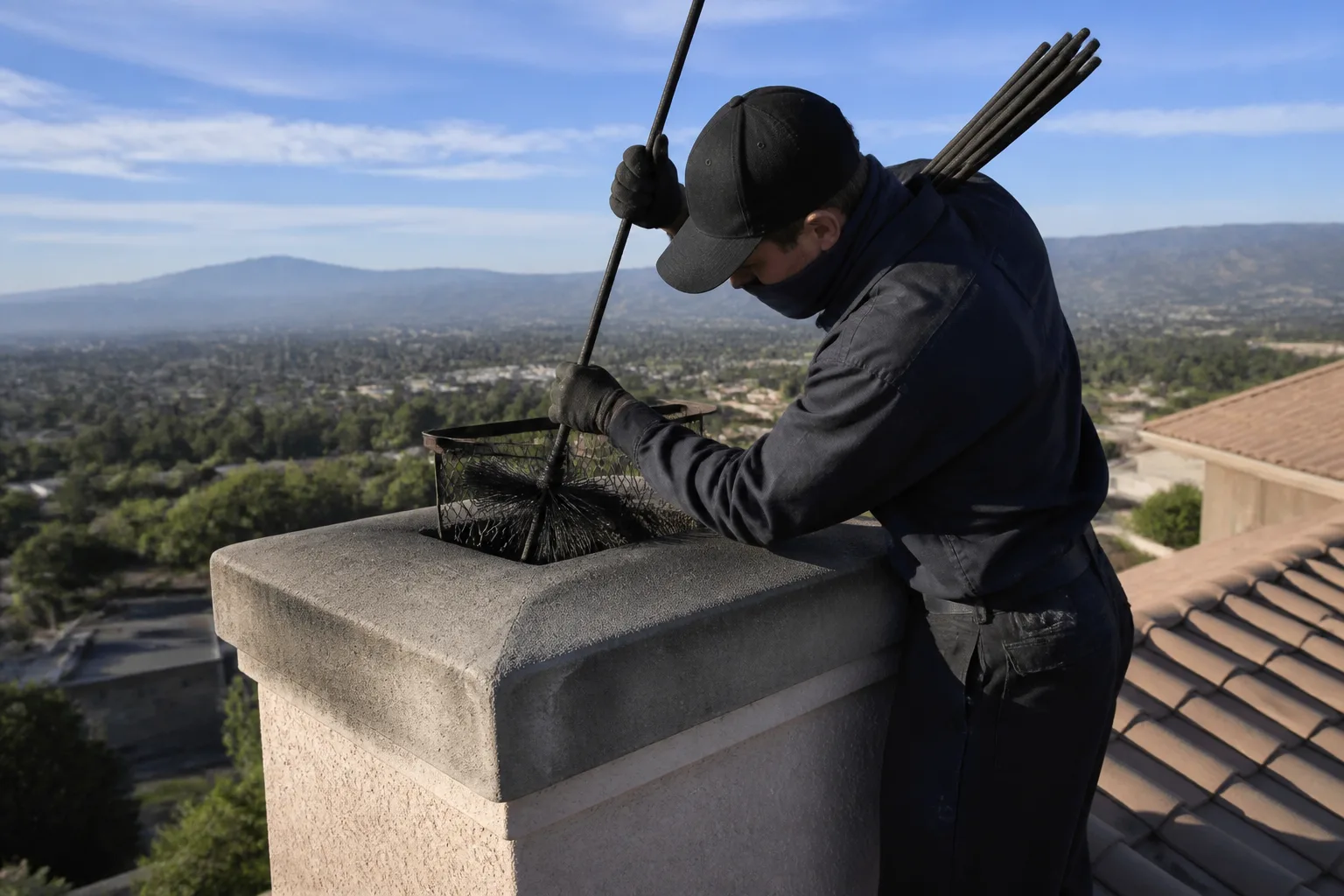
The basic goal is the same: remove creosote and soot so the flue moves exhaust efficiently. But the method is different. Clay tile flues have flat, rigid surfaces, so a standard wire or poly brush sized to the tile dimension does the job. A DuraFlex liner has a corrugated interior wall, and the ridges and valleys trap debris differently. We typically use a brush profile matched to the liner’s inside diameter and construction, and we move more slowly through corrugated sections. The real work happens after the brushing. With a clay flue, we’re checking for cracks and spalling. With a DuraFlex liner, we’re looking on camera for kinks, collapsed sections, sagging at the elbow, tears at the connector, or signs the liner was crushed during installation or by a chimney fire. In Mission Valley, where fireplaces often sit dormant for months at a stretch between short burn seasons, a collapsed or kinked section can hide behind otherwise normal draft behavior. The camera is what tells us the difference.
The Mission Valley Factors: Why Insulation Wrap Changes the Game
This part surprises homeowners. San Diego County has a mild climate, but the temperature difference between a hot firebox and the cooler ambient air moving across the chimney chase still drives condensation inside an uninsulated liner. When warm exhaust hits a liner wall that’s cooled by night air or a shaded chase on a Mission Valley hillside, the gases condense and create an acidic film. That film attracts and binds creosote, which builds faster and burns hotter than dry, fluffy creosote. An insulated DuraFlex liner keeps the flue gases hotter all the way to the top, which means less condensation and a more stable draft. When we install or inspect a liner in Mission Valley, we pay attention to whether the insulation wrap is intact and whether the top plate and storm collar are sealed correctly. Missing insulation is not a cosmetic issue. It changes how fast the liner loads up, and it changes how dangerous a chimney fire would be.
Component Matching: Top Plates, Connectors, and Why Mismatches Matter
A DuraFlex liner is a listed system, which means it was tested and rated as a whole assembly, not as a collection of interchangeable parts from different brands. The liner body, the top plate, the rain cap, the appliance connector, and the insulation wrap are all engineered to work together. When someone pairs a DuraFlex liner with a cap from another manufacturer, or fabricates a connector on site, the listed rating no longer applies. That’s a code issue and a real safety issue. We source from brands like Famco and Copperfield for cap and termination components precisely because those products are engineered for professional chimney systems and are compatible with proper DuraFlex installations. The same logic applies to a dryer vent cleaning job that involves a transition from the dryer to the wall. If the transition piece is mismatched, the airflow is wrong, and the lint load goes up. The principle is the same across every venting system we service: components that were tested together stay together.
The Resale and Documentation Side Most Homeowners Miss
Here’s a practical point for any Mission Valley homeowner who might sell in the next five years. When a buyer orders a Level 2 chimney inspection during escrow, the inspector will ask for documentation. What alloy is the liner? When was it installed? Who installed it? Is it insulated? Is it rated for the current appliance, or for the wood stove the buyer wants to put in next year? If you can’t produce that documentation, the inspection gets messy and the transaction gets delayed. We recommend keeping the installation paperwork, the alloy spec sheet, and any sweep records in one folder, whether physical or digital. If you bought the home without that paperwork, we can document what’s visible during a sweep and inspection, but it’s better to have the original records. This is a specific, undersold reason to work with a Chimney Sweep Mission Valley specialist who keeps proper records. The liner is a building component, not an accessory. It deserves the same paper trail as the water heater or the electrical panel.
How Long Does a DuraFlex Liner Last, and What Damages One?
A properly installed and maintained stainless DuraFlex liner can last the life of the house in many cases, but “properly maintained” is doing a lot of work in that sentence. The common failure points we see are mechanical, not age-related. A chimney fire can warp or buckle a stainless liner in seconds. Water intrusion through a failed top plate or cracked crown will corrode the liner over time, especially at the base where water pools. Improper installation, like a kinked elbow or a liner pulled past its bend radius, will create a restriction that accelerates creosote buildup and reduces draft. In Mission Valley, we also see liners damaged by rusted-out fireboxes that let moisture into the connector area. The bottom line is that a DuraFlex liner is a solid product, but it’s not immune to the system around it. Regular sweeps catch small issues before they turn into $3,000 replacements. If you don’t know the condition of your liner, call (877) 752-2758. We answer 24/7. Fast dispatch from 7am to 7pm, Sunday through Friday.
When to Call a Pro Instead of DIYing a Liner Inspection
Some chimney work is genuinely dangerous to attempt yourself. A flexible liner inspection means getting on the roof, often on a steep Mission Valley pitch, and running a camera through a confined flue. It also means recognizing what a failing liner section looks like on a monitor. If you’re comfortable with basic maintenance, you can keep the firebox clean and check the damper movement. But inspecting a liner, confirming alloy spec, checking the insulation wrap, and documenting the connector condition is professional work. It requires training, a camera system, and the experience to know the difference between normal surface scaling and a liner that’s about to separate at the seam. If you have any doubt, call a specialist. The estimate is free, and the written estimate sets the final price before any work begins.
Related services in Mission Valley: we provide chimney sweeping, chimney repair, and dryer vent cleaning with no subcontracting.
The Bottom Line
A DuraFlex liner is a specific, documented engineering decision, and it should be treated that way. Know the alloy grade, keep the paperwork, inspect with a camera, and match components from the same professional-grade family. If you’re in Mission Valley and you want a specialist who works with these systems every day, we offer free estimates. Call (877) 752-2758. We answer 24/7. Fast dispatch from 7am to 7pm, Sunday through Friday.
Frequently Asked Questions
A DuraFlex liner sweep is priced per job based on the condition, the length, and the access points involved. The estimate is free, and the written estimate sets the final price before any work begins. Call (877) 752-2758 for an exact quote for your fireplace.
We recommend a sweep after roughly one cord of wood burned, or once per year as a minimum for any fireplace in active use. Gas log sets produce different residue and can sometimes go longer, but the inspection part of the visit still matters. The camera pass catches damage that you won’t see from the living room.
No. The alloy grade and insulation spec must match the fuel. A liner rated for gas is not automatically safe for wood. If you want to switch fuels, have the liner documented and confirmed for the new appliance before you light the first fire.
You’re betting that the liner hasn’t been damaged by a chimney fire, water, or installation stress. In Mission Valley, long dormant periods between burn seasons mean problems can sit unnoticed for months. A camera inspection costs a fraction of a new liner, and the estimate for the inspection is free. Call (877) 752-2758.
Written by the team at Chimney Sweep Mission Valley, serving Mission Valley since 2016.
Need Chimney Cleaning Help?
Call Chimney Sweep Mission Valley - licensed & insured, here with fast help in Mission Valley.
(877) 752-2758